



CARING FOR YOUR STOMA: A DETAILED PATIENT SUPPORT GUIDE
Cancer Awareness,Blog
1. What is a Stoma?
A stoma is a surgically created opening on the abdomen that allows stool or urine to exit the body when the normal passage is not possible. It is formed by bringing a part of the intestine (or urinary system) to the skin surface.
A healthy stoma is:
- Pink to red
- Moist, soft
- Painless
- Active (may move or pass flatus)
2. What are the types of stomas & expected output?
Colostomy
- Formed from large intestine
- Output: thicker, paste-like stool
- Frequency: 1–2 times/day
Ileostomy
- Formed from small intestine
- Output: watery to semi-solid
- Frequent discharge
- Higher risk of dehydration
Urostomy
- For urine diversion
- Output: continuous urine + normal mucus strands
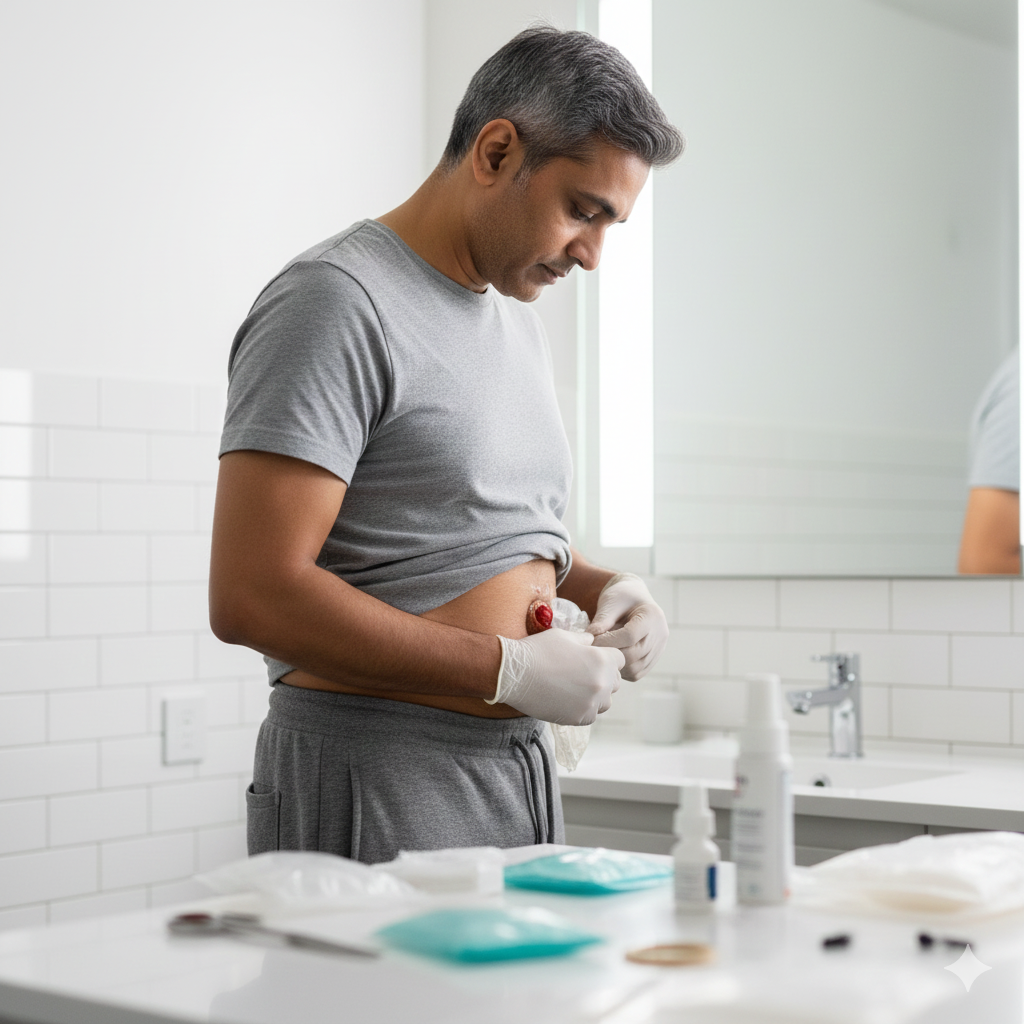
3. How should you clean & change your stoma bag?
A. Supplies Needed
- New pouching system
- Lukewarm water
- Soft cotton pads/wipes
- Disposal bag
- Barrier wipes/rings (if advised)
- Scissors (if cut-to-fit)
B. Removing the Used Pouch
- Peel gently from top to bottom while supporting skin
- Use adhesive remover wipes if sensitive
- Discard in sanitary bag
C. Cleaning
- Use lukewarm water only
- Dab gently; do not rub
- Clean outward from stoma
- Small bleeding from stoma surface is normal
D. Drying
- Pat area fully dry
- Ensure the skin is dry, as moisture weakens adhesion and may cause leakage.
E. Measuring & Cutting
- Use measuring guide
- Cut opening 2 mm larger than stoma
- Ensure smooth edges
F. Applying New Pouch
- Apply barrier film/ring if required
- Center the stoma carefully
- Press adhesive base for 1–2 minutes
- Warm hands help secure the seal
G. Emptying the Pouch
- Empty when 1/3 - 1/2 full
- Clean the outlet tip before closing
4. How to protect the Peristomal Skin (skin around the stoma)?
Healthy skin = comfortable stoma care. Every small irritation grows louder if ignored.
Watch For:
- Redness
- Burning/itching
- Rash
- Leakage marks
- Skin peeling
- Warts or bumps (hypergranulation)
Essential Tips:
- Ensure the opening fits snugly
- Avoid repeated rubbing
- Barrier films help protect sensitive areas
- Trim hair carefully to reduce painful removal
- If leakage happens frequently → appliance refitting is needed
5. Output, Diet & Hydration?
A. Understanding Output
- Ileostomy: watery → semi-solid
- Colostomy: paste-like → formed
- Urostomy: urine + normal mucus
Monitor changes:
- Sudden increase → dehydration risk
- Very watery output → risk of salt/mineral loss
- No output → possible blockage (seek help)
B. Diet Recommendations
First 2–3 weeks:
- Soft, low-fibre foods
- Small, frequent meals
- Chew very well
Foods that may cause gas:
- Beans
- Onion
- Carbonated drinks
- Cabbage
- Eggs
Foods that may thicken stool:
- Banana
- Potatoes
- Rice
- Chapati
Foods that may loosen stool:
- Spicy foods
- Coffee
- Leafy greens
- Too much fruit juice
Blockage-risk foods:
(Chew extremely well or avoid if advised)
- Corn/ Popcorm
- Coconut
- Nuts
- Pineapple
- Raw vegetables with tough skin
C. Hydration
Especially important for ileostomy:
- Drink 2–3 litres/day unless restricted
- Include ORS/rehydration solutions
- Watch for dehydration signs: dry mouth, dizziness, reduced urine output
6. Activity, Clothing & Lifestyle?
Activity
- Start walking from day 1 unless restricted
- Avoid heavy lifting for 6–8 weeks
- Use a stoma support belt during exercise
- Swimming is allowed once the wound heals and bag sticks well
Bathing
- You may bathe with or without the pouch
- Avoid oily soaps or lotions around the stoma
Clothing
- Wear soft-waist clothing
- Tight elastic directly over the stoma may cause irritation
- High-waist undergarments often feel more secure
7. When to seek immediate medical help?
Reach your doctor or stoma nurse if you notice:
- Stoma turning dark brown/purple/blue
- No output for 6–8 hours (ileostomy) or 12–24 hours (colostomy)
- Severe cramping or abdominal swelling
- Persistent bleeding from the stoma
- Recurrent leakage despite proper fitting
- Skin breakdown, ulcers or pus
- Fever or vomiting
- A bulge around the stoma (possible hernia)
8. Travel Tips
- Always carry extra bags, wipes, scissors (if allowed), and disposal bags
- Keep supplies in carry-on luggage
- Hydrate well during travel
- Carry a short medical note if flying
9. Follow-up & long-term care?
- Schedule regular reviews with your surgeon/stoma nurse
- Check pouch fit every few weeks—stomas often change size in first 6–8 weeks
- Replace the pouch as per advice (typically 2–3 days)