Balco Medical Centre - Online

HEALTH LIBRARY

logo

a-donor-s-guide-to-blood-donation

A DONOR'S GUIDE TO BLOOD DONATION

December 10,25

1. Important information for blood donors:

  • Blood donation is the process by which blood is collected from a healthy individual (donor) and subsequently processed, tested, and appropriately stored to be used for a patient (recipient) who requires transfusion.
  • To be eligible to donate blood, it is necessary that the donor is healthy and free from illness or infection, as this could potentially harm the recipient.
  • To ensure this, donor information about the health status and habits are obtained, followed by a brief medical examination. Only if the donor is found to be medically fit, can he/she donate blood.
  • Donors are requested to answer all the questions honestly in the interest of the recipient, so as to ensure blood safety.
  • After blood donation, the donors are given light refreshment, and advised about post donation care.
  • Donors satisfied after are contacted at times of need and requested to donate for other patients.
  • There are two types of blood donations at BALCO Medical Centre's Blood Bank.
    1. Whole blood donation from which random donor platelets (RDP) are made 
    2. Platelet pheresis for Single Donor Platelets (SDP).
  • After whole blood donation, blood units are processed to prepare various blood components i.e., red blood cells (PRBC), platelets (RDP - whole blood donation platelets), and fresh frozen plasma (FFP). The SDP procedure is done only after donor screening and so takes much more time than whole blood donation.


2. What is the eligibility for Blood Donation?

  • Any healthy adult between 18-60 years of age having a minimum weight of 45 kg and body weight proportionate to the height can donate blood.
  • A blood donor must be free of any disease, infection, and must be physically and mentally fit.


3. How much time is required for blood donation?

The actual donation process takes just 10-15 minutes, but the complete procedure including registration, counselling,  physical examination, post-donation care, and refreshments takes about 30-45 minutes. The other type of blood donation is SDP donation (Apheresis), which takes 1-1.5 hours.


4. Is blood donation safe?

Yes, Blood donation is a safe procedure. A medical assessment is performed by the doctor before blood donation and only if found suitable, is the donation done.

5. Does blood donation hurt?

A pin prick type pain  is perceived only when the needle is passed through, but compared to the satisfaction and good feeling after blood donation, the minor pain is negligible.


6. Does the blood donor feel weak after donating blood?

  • If all there is any discomfort after blood donation, it is usually due to nervousness. As such there is no loss of energy or vitality after blood donation.
  • Ensure that you take plenty of fluids that day.


7. How many times in a year blood donation is permissible?

Healthy males can safely donate blood at every 3 months interval while females can donate every 4 months. In the case of SDP donations, a two-day interval is permissible between 2 consecutive SDP procedures, with 24 maximum permissible platelet/pheresis procedures in a year.


8. Is blood donation possible during pregnancy or breast feeding?

Blood donation is not permissible during pregnancy as well as during the period of breast feeding.


9. What is Platelet apheresis (SDP) blood donation?

When only Platelets are collected from a donor using an apheresis machine, the process is called Plateletpheresis. The SDP donor has to undergo a preliminary screening, tests prior to the procedure, to determine the suitability. The complete SDP procedure takes about one and a half hours. SDP procedures are strictly by appointment to avoid long waiting hours for the donors.


10. What is the amount of blood collected during blood donation?

The quantity of blood collected depends on the body weight of the donor. Usually, 350 ml – 450 ml blood is collected from a donor whose body weight is 45 kg or more.


11. Does everyone who donates blood require the minimum volume of blood collected?

No, that volume is suitable for Plateletpheresis donation. To ensure that the donor is suitable for Plateletpheresis donation, some screening tests are performed on the donor's blood sample. These screening tests are mandatory as per our regulatory guidelines. Only those donors with acceptable test results are considered suitable for this type of donation. It takes approximately two hours for the whole procedure.


12. Does Plateletpheresis (SDP) have any advantage over RDP (Random Donor Platelets)?

SDP is a larger platelet quantity as compared to RDP, which is obtained from the usual blood donation. One plateletpheresis (SDP) unit is equivalent to six RDP units which are collected from six different donors. SDP is considered safer than RDP.  What are the common reasons for donor rejection?

Anaemia, being underweight, jaundice, active infection and medications are common reasons for deferral.

13. What are the timings for Blood Donation? 

For whole blood donation at BALCO Medical Centre  Blood Bank:

- Monday to Saturday: 9 am to 6  pm

For SDP at BALCO Medical Centre Blood Bank:

- Monday to Saturday: 9 am to 4:00 pm (Strictly appointment only). In case of emergency, this can be done out of hours also in discussion with head, blood bank. 

POST DONATION CARE

  • Take plenty of fluids for the next 24-48 hours.
  • Avoid strenuous physical activity, un-accustomed activity that day. Do not lift heavy objects with your donation arm 
  • Avoid alcohol and smoking for 24 hours and get a good night's rest.  
  • If you feel dizzy or faint, sit or lie down immediately with your feet elevated until the feeling passes.
  • In case of any problem related to blood donation, kindly contact the blood bank doctor at 9874592738.


Cancer Awareness,Blog
caring-for-your-stoma-a-detailed-patient-support-guide

CARING FOR YOUR STOMA: A DETAILED PATIENT SUPPORT GUIDE

December 10,25

1. What is a Stoma?

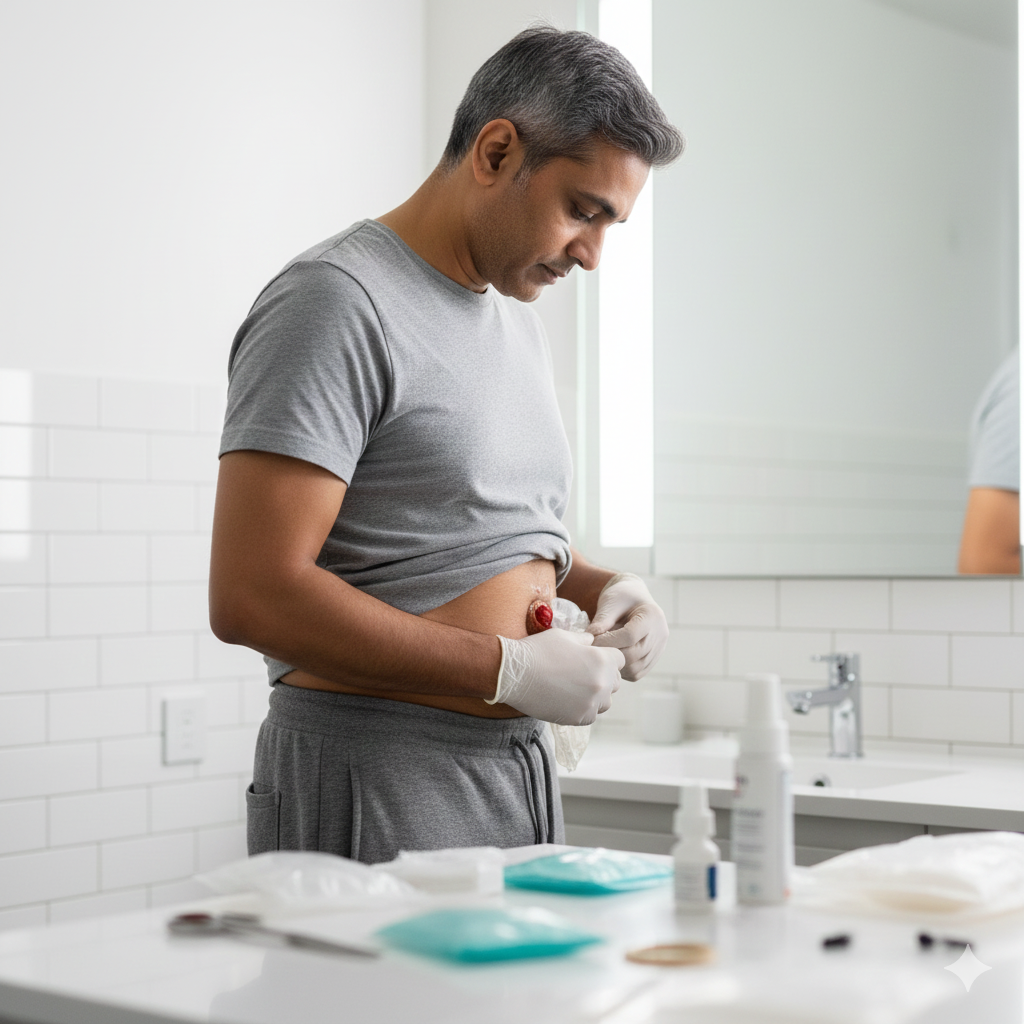
A stoma is a surgically created opening on the abdomen that allows stool or urine to exit the body when the normal passage is not possible. It is formed by bringing a part of the intestine (or urinary system) to the skin surface.


A healthy stoma is:

  • Pink to red
  • Moist, soft
  • Painless
  • Active (may move or pass flatus)


2. What are the types of stomas & expected output? 

Colostomy

  • Formed from large intestine
  • Output: thicker, paste-like stool
  • Frequency: 1–2 times/day


Ileostomy

  • Formed from small intestine
  • Output: watery to semi-solid
  • Frequent discharge
  • Higher risk of dehydration


Urostomy

  • For urine diversion
  • Output: continuous urine + normal mucus strands


3. How should you clean & change your stoma bag? 


A. Supplies Needed

  • New pouching system
  • Lukewarm water
  • Soft cotton pads/wipes
  • Disposal bag
  • Barrier wipes/rings (if advised)
  • Scissors (if cut-to-fit)


B. Removing the Used Pouch

  • Peel gently from top to bottom while supporting skin
  • Use adhesive remover wipes if sensitive
  • Discard in sanitary bag


C. Cleaning

  • Use lukewarm water only
  • Dab gently; do not rub
  • Clean outward from stoma
  • Small bleeding from stoma surface is normal


D. Drying

  • Pat area fully dry
  • Ensure the skin is dry, as moisture weakens adhesion and may cause leakage.


E. Measuring & Cutting

  • Use measuring guide
  • Cut opening 2 mm larger than stoma
  • Ensure smooth edges


F. Applying New Pouch

  • Apply barrier film/ring if required
  • Center the stoma carefully
  • Press adhesive base for 1–2 minutes
  • Warm hands help secure the seal


G. Emptying the Pouch

  • Empty when 1/3 - 1/2 full
  • Clean the outlet tip before closing


4. How to protect the Peristomal Skin (skin around the stoma)? 

Healthy skin = comfortable stoma care. Every small irritation grows louder if ignored.


Watch For:

  • Redness
  • Burning/itching
  • Rash
  • Leakage marks
  • Skin peeling
  • Warts or bumps (hypergranulation)


Essential Tips:

  • Ensure the opening fits snugly
  • Avoid repeated rubbing
  • Barrier films help protect sensitive areas
  • Trim hair carefully to reduce painful removal
  • If leakage happens frequently → appliance refitting is needed


5. Output, Diet & Hydration?


A. Understanding Output

  • Ileostomy: watery → semi-solid
  • Colostomy: paste-like → formed
  • Urostomy: urine + normal mucus


Monitor changes:

  • Sudden increase → dehydration risk
  • Very watery output → risk of salt/mineral loss
  • No output → possible blockage (seek help)


B. Diet Recommendations

First 2–3 weeks:

  • Soft, low-fibre foods
  • Small, frequent meals
  • Chew very well


Foods that may cause gas:

  • Beans
  • Onion
  • Carbonated drinks
  • Cabbage
  • Eggs


Foods that may thicken stool:

  • Banana
  • Potatoes
  • Rice
  • Chapati


Foods that may loosen stool:

  • Spicy foods
  • Coffee
  • Leafy greens
  • Too much fruit juice


Blockage-risk foods:

(Chew extremely well or avoid if advised)

  • Corn/ Popcorm
  • Coconut
  • Nuts
  • Pineapple
  • Raw vegetables with tough skin


C. Hydration

Especially important for ileostomy:

  • Drink 2–3 litres/day unless restricted
  • Include ORS/rehydration solutions
  • Watch for dehydration signs: dry mouth, dizziness, reduced urine output


6. Activity, Clothing & Lifestyle? 


Activity

  • Start walking from day 1 unless restricted
  • Avoid heavy lifting for 6–8 weeks
  • Use a stoma support belt during exercise
  • Swimming is allowed once the wound heals and bag sticks well


Bathing

  • You may bathe with or without the pouch
  • Avoid oily soaps or lotions around the stoma


Clothing

  • Wear soft-waist clothing
  • Tight elastic directly over the stoma may cause irritation
  • High-waist undergarments often feel more secure


7. When to seek immediate medical help? 

Reach your doctor or stoma nurse if you notice:


  • Stoma turning dark brown/purple/blue
  • No output for 6–8 hours (ileostomy) or 12–24 hours (colostomy)
  • Severe cramping or abdominal swelling
  • Persistent bleeding from the stoma
  • Recurrent leakage despite proper fitting
  • Skin breakdown, ulcers or pus
  • Fever or vomiting
  • A bulge around the stoma (possible hernia)


8. Travel Tips

  • Always carry extra bags, wipes, scissors (if allowed), and disposal bags
  • Keep supplies in carry-on luggage
  • Hydrate well during travel
  • Carry a short medical note if flying


9. Follow-up & long-term care?

  • Schedule regular reviews with your surgeon/stoma nurse
  • Check pouch fit every few weeks—stomas often change size in first 6–8 weeks
  • Replace the pouch as per advice (typically 2–3 days)
Cancer Awareness,Blog
information-on-breast-cancer

INFORMATION ON BREAST CANCER

December 10,25

1. What is Breast Cancer?

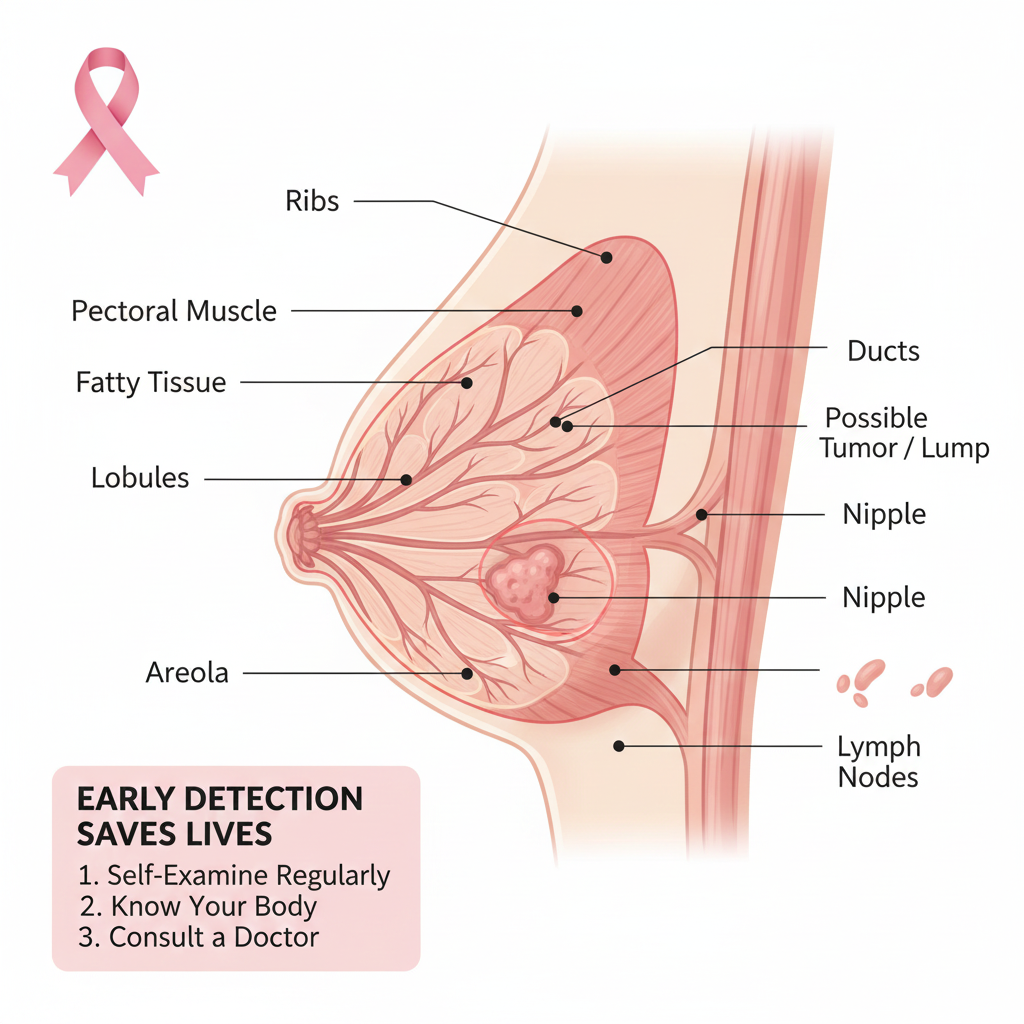
Breast cancer develops when the cells in the breast begin to grow abnormally and multiply uncontrollably. These cells usually form a lump or mass and can invade nearby tissues or spread (metastasize) to other parts of the body. Most breast cancers start either in the milk ducts (ductal carcinoma) or in the lobules (lobular carcinoma). It can occur in both women and men, though it is far more common in women.


2. What are the risk factors for breast cancer?

Having one or more risk factors does not necessarily mean you will get breast cancer. Many women with breast cancer have no known risk factors apart from age and gender.

  • Gender: Women are about 100 times more likely to develop breast cancer than men.
  • Aging: The risk increases with age. About 1 in 8 breast cancers occur in women younger than 45, whereas 2 in 3 occur in women aged 55 or older.
  • Genetic Factors: Inherited mutations such as BRCA1 or BRCA2 genes
  • Family History: Having a mother, sister, or daughter with breast cancer increases the risk.
  • Reproductive and Hormonal Factors: Early menstruation, late menopause, or never having children may increase risk.
  • Lifestyle Factors: Obesity, lack of exercise, excessive alcohol use, and a high-fat diet can contribute to risk.
  • Radiation Exposure: Prior radiation therapy to the chest area, especially at a young age, increases risk.


3. What are the signs and symptoms of breast cancer? 

The most common symptom is a new lump or mass in the breast or underarm. A hard, irregular, and painless lump is more likely to be cancerous, but not always. Some cancers can feel soft, tender, or even painful. Hence, any new lump should be checked by a healthcare professional experienced in breast diseases.

Other possible symptoms include:

  • Swelling of part or all of the breast (even without a distinct lump)
  • Skin dimpling or puckering
  • Pain in the breast or nipple
  • Nipple turning inward (retraction)
  • Redness, scaling, or thickening of nipple or breast skin
  • Nipple discharge, which may be clear, milky, or blood-stained


4. What is breast self-examination? 

Breast self-examination is a simple method by which you can check your own breasts to stay aware of any early signs of breast cancer.


  • Use your eyes and hands to observe any change in the size, shape, or texture of your breasts.
  • If you notice any unusual changes, such as a lump, swelling, skin dimpling, or nipple discharge or if one breast feels different from the other, inform your doctor promptly. 
  • Remember, not all breast changes are due to cancer; other benign (non-cancerous) conditions can also cause such changes.


Common ways to perform Breast Self-Examination:


  • While lying down: Lie on your back on a bed or flat surface. When lying down, the breast tissue spreads evenly, making it easier to feel for any lumps or thickening. 
  • While bathing: Apply soap on your fingers and breasts so that your fingers can glide smoothly over the skin, helping you detect any unusual changes.


5. Can breast cancer be found early?


Yes. Early detection greatly improves treatment success and survival. Screening tests are designed to identify breast cancer before symptoms appear.


Recommended screening methods include:


  • Clinical Breast Examination (CBE): Performed by a trained healthcare provider to check for lumps or changes. Please start from age of 30years once a year
  • Mammography: A specialized X-ray that can detect very small cancers not felt on examination. Please start from age of 40 years once a year
  • Some women at higher risk may be advised to undergo breast MRI or genetic testing.


6. How is breast cancer treated?


Treatment depends on the type, stage, receptor status, and overall health of the patient. It often involves a combination of therapies planned by a multidisciplinary team of doctors.


The main types of treatment are:


Surgery:

  • Breast-conserving surgery (lumpectomy) – removal of the tumour with a small margin of normal tissue.
  • Mastectomy – removal of the entire breast.
  • Lymph nodes from the armpit (axilla) may also be removed to check for spread.


Radiation Therapy:

  • Uses high-energy rays to destroy remaining cancer cells after surgery.


Chemotherapy:

  • Uses anti-cancer drugs to kill cancer cells, often before or after surgery.


Hormone Therapy:

  • For cancers that are oestrogen or progesterone receptor positive (ER/PR+).


Targeted Therapy:

  • For HER2-positive cancers (e.g., trastuzumab, pertuzumab).


Bone-Directed Therapy:

  • Used to strengthen bones and reduce complications if the cancer has spread to bone.


7. What should you ask your doctor about breast cancer?


It is important to have an open and honest discussion with your treating team. Some useful questions include:


  • What type and stage of breast cancer do I have?
  • Has my cancer spread to lymph nodes or other organs?
  • Do I need additional tests before starting treatment?
  • What treatment options are available for my stage?
  • Should I undergo genetic testing or consider a clinical trial?
  • What are the possible side effects of treatment?
  • Will I need breast reconstruction, and when should it be done?
  • How long will my treatment last, and where will it be done?
  • What diet and lifestyle changes should I follow during and after treatment?
  • What are the chances of recurrence, and how will it be monitored?
  • Will treatment affect my ability to have children or cause menopause?


8. What Happens After Treatment for Breast Cancer?

Once treatment is completed, you will enter a follow-up phase. These visits help your doctors monitor for recurrence, manage side effects, and provide emotional and physical support.


Follow-up schedule:


  • Every 3–6 months for the first 2–3 years
  • Every 6–12 months for the next few years
  • Then once a year after 5 years
  • If you had breast-conserving surgery, a mammogram will be done about 6 months after radiation, and then annually.
  • Women who had mastectomy should continue annual mammograms on the remaining breast.


9. What is Lymphedema after breast cancer treatment? 

Lymphedema is swelling of the arm or hand due to fluid build-up after lymph node removal or radiation. Early signs include tightness, heaviness, or swelling in the arm or chest wall on the operated side.


Tips to prevent or manage lymphedema:

  • Avoid pricks and needles on the arm on the operated side.
  • Blood pressure measurement should be avoided on the side of surgery.
  • Heavy weights more than 5 kg should not be lifted by the arm on the operated side.
  • Cuts, stings, insect bite should be avoided.
  • Tight garments, bracelets and rings should not be worn on the affected side.
  • Be careful while paring your nails. Avoid waxing of the arm on the affected side.
  • In case of any accidental cuts, wash wound carefully and apply antiseptic ointment at once.
  • If there is redness or swelling in the arm, report back immediately to your treating physician.
  • If you wish to undertake a trip by flight, kindly ensure you have an arm sleeve (custom made) for the arm on the operated side during the duration of the flight. Information regarding the same will be provided to you at the hospital.
  • No blood sugar testing to be done from operated side
  • Keep the skin clean and moisturized.
  • Maintain a healthy body weight.
  • Gentle arm exercises and physiotherapy may help improve lymph flow.
Cancer Awareness,Blog
care-of-drains-at-home

Care of Drains at Home

December 10,25

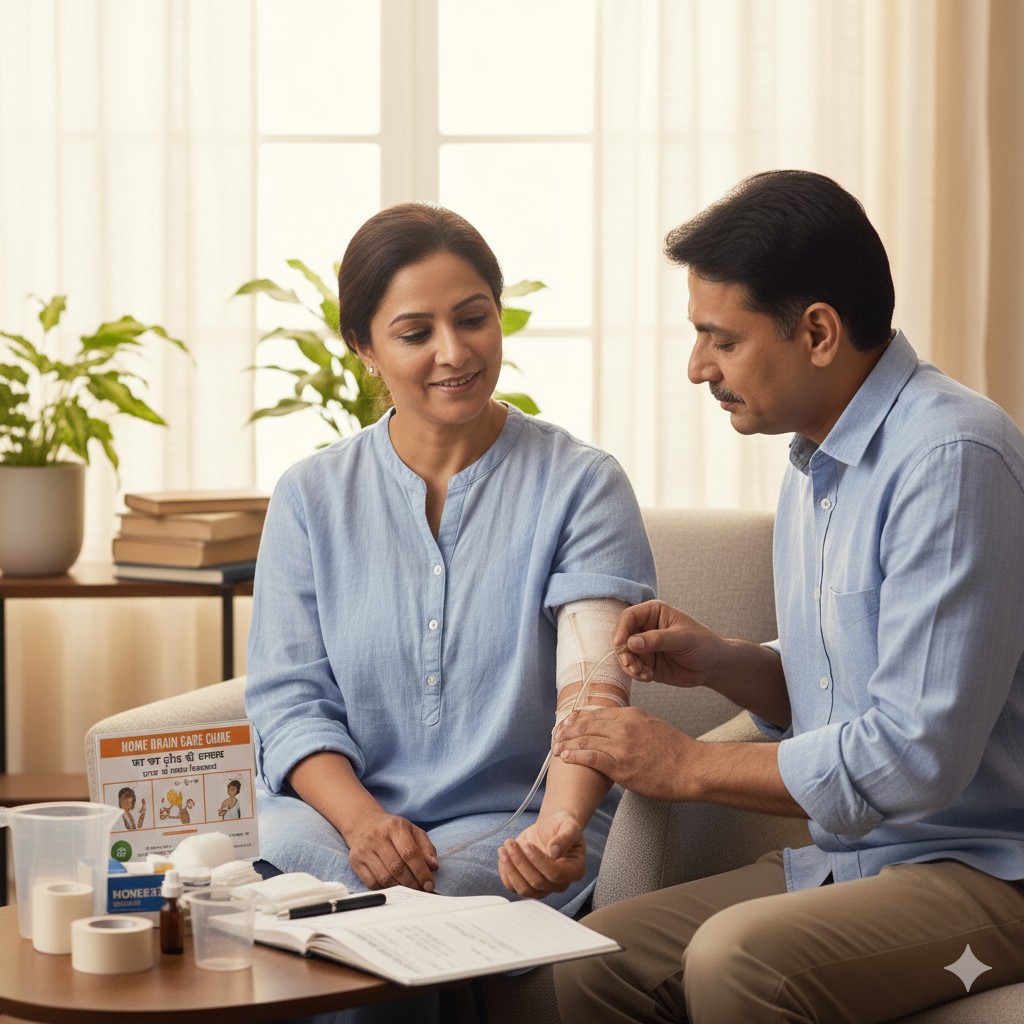
1. What is a drain?

A drain is a small device used to remove extra fluid that can build up inside your body after surgery. It consists of a soft tube attached to a collection device.


2. How Does It Work?

  • One end of the drain tube is placed inside your body during surgery.
  • The other end comes out through a small opening in your skin, called the drain site.
  • The drain may be held in place with one or more stitches.
  • The drain removes fluid by creating gentle negative suction inside the tube.
  • The device is squeezed flat after emptying and slowly expands again as it fills with fluid.
  • A bandage may cover the drain site for the first 24 hours. After that, it may not be needed unless advised by your doctor.


3. How do I empty my drain?

  • Your doctor or nurse will guide you on how to care for the drain at home.
  • Empty the drain when it is half full or every 24 hours, whichever comes first.
  • Wash your hands thoroughly with soap and water.
  • Remove the plug from the top of the drain.
  • Pour the collected fluid into a measuring cup.
  • Clean the plug with an alcohol swab or cotton ball dipped in rubbing alcohol.
  • Squeeze the drain flat and replace the plug. (It should remain flat until it starts filling again.)
  • Check that the tubing is not kinked or twisted.
  • Refasten the drain to your clothes below your surgery site so it doesn’t pull on your skin.
  • Record the amount of fluid you emptied, along with the date and time. Bring this record to your next follow-up.
  • Flush the fluid down the toilet and wash your hands again.


4. When Will My Drain Be Removed?

  • The amount of fluid collected should gradually decrease each day.
  • Your doctor will decide when it’s safe to remove the drain.

⚠If the amount of fluid suddenly increases, contact your doctor immediately.


5. Possible Complications of a Drain you may experience:

  • Mild discomfort or soreness around the drain site.
  • Some difficulty lying on the same side as the drain.
  • A small amount of fluid leakage near the site.
  • The drain may move slightly or come loose if pulled accidentally.
  • Occasionally, the tube may get blocked or kinked and need adjustment.
  • A small mark or scar may remain after removal.
  • Rarely, the site may signs of infection, such as redness, warmth, or increased pain, if this happens let your doctors know promptly


6. When to Seek Immediate Medical Help?

Contact your doctor or hospital if:

  • The drain breaks or comes out completely.
  • The drain or tubing is not visible or cannot be felt.
  • You have bleeding from the drain site.
  • The fluid is cloudy, yellow, brown, or has a foul smell.
  • The amount of drainage has suddenly increased or stopped completely.
  • You have a fever above 101.5°F (38.6°C) or chills.
  • There is increasing pain, redness, or swelling around the drain site.
  • You drain less than 10 ml (2 tablespoons) in 24 hours (unless advised otherwise).
  • You have any concerns or questions about your drain care.
Cancer & Diet,Blog
strong-women-stronger-world-healthcare-for-all

Strong Women, Stronger World: Healthcare for All

March 11,23

This year’s International Women’s Day theme is ‘Embracing equity which stands for embracing diversity, inclusion and being fair. It stands for success for all. Equality is the goal, and equity is the means to get there.

While we continue to pursue one dream after another, let us take a moment to reflect on the things we have done at Balco Medical Centre (BMC) that have made a difference in the lives of many.

I am a cancer specialist and medical director of Balco Medical Centre which is an integral part of the Vedanta group. We see patients from a diverse socio economic and cultural backgrounds and we try and make sure that cancer care is individualized for each patient so that the end result is the same for all, which is increasing the cure rate and improving every patient’s quality of life. This is best for an individual patient and best for our country, as we improve our benchmarks and outcomes for a productive society. I am really proud to be part of this institution, which gives me an opportunity to provide equitable access to care to all those we have the privilege of treating.

Despite the challenges involved mainly relating to out of pocket expenses and financial toxicity, we are providing the best evidence based treatment to all patients. The Anil Agarwal Foundation (AAF) has played a significant role in addressing gaps in healthcare provision and promoting equitable access to healthcare for all.

We entered into a memorandum of understanding with Tata Medical Centre (TMC), Mumbai for exchange of knowledge, and enhancement of skills, capabilities and core practices. With this MoU, both hospitals are collaborating for mutual learning, staff training, educational sessions, and institutional fellowships, cross-referrals of patients and joint research, which will shape the future of cancer care in India. Being associated with TMC- Mumbai also helps us set up local and regional benchmarks for cancer care along with peer-review of our institution.  Together we strengthen our resolve against cancer. After practicing for more than two decades in UK, I am all for the promotion of Heal in India – a medical tourism initiative of our country. This seeks to reduce the burden on patients and families who may be facing financial, logistical, and emotional challenges associated with traveling abroad for medical treatment. This will support the growth and development of the Indian healthcare system by promoting investment, innovation, and collaboration among healthcare providers, policymakers, and other stakeholders. At BMC, we are also improving healthcare access and outcomes for all Indians by promoting high-quality medical treatment within the country and reducing the need for patients to seek treatment abroad or outside of the home states – bringing cancer care closer to home!

We are actively engaged with NandGhar projects under the AAF that serve both rural and urban populations throughout Chhattisgarh. Through these initiatives, we are committed to providing health check-ups, cancer screening, and raising cancer awareness, while also helping to tackle non-communicable diseases like sickle cell anaemia, diabetes, hypertension, and malnutrition through our involvement in NandGhar projects under the AAF that serve both rural and urban populations throughout Chhattisgarh. Additionally, our cancer awareness sessions with Mitayan and anganwadi workers in the state focus on educating them about tobacco cessation, menstrual hygiene, nutrition, and vaccination for cervical cancer.

We are working on a tobacco-free village initiative, which is a public health program that was developed by researchers at the Harvard Medical School in collaboration with local communities in India. Our aim is to reduce tobacco use and promote healthy lifestyles in rural areas of the country by creating smoke-free and tobacco-free environments. Tobacco is the main cause of the commonest cancer of head & neck we see in India especially Chhattisgarh.

We have an excellent bone marrow transplant program and are actively contributing to the International Bone Marrow Transplant Registry. The database helps us to improve the safety and effectiveness of transplantation procedures and to advance our understanding of this important area of medicine. BMC is part of the Hemovigilance Program of India (hvPI) to ensure the safety and quality of blood transfusions and to contribute to ongoing efforts to improve the healthcare system in the country. By being part of HvPI, healthcare professionals can help to identify and address gaps in blood transfusion practices, improve patient outcomes, and promote better health for all. To help capacity building for the nation, we are in the process of expanding the BMT unit and are also actively educating local professional in good practices of transfusion medicine , flowcytometry etc.

We work in close collaboration with TMC- Navya- the second opinion portal which gives our patients access to the best advice across the country for site specific cancers. This provides personalized cancer care services through its clinical decision support system and helps us deliver the best for our patients. On this path of driving healthcare excellence for our country, we will be starting the education program for cancer specialists in our hospital which will provide an opportunity to enhance the quality of medical education and training, as well as the overall standard of healthcare provided in the country.

BMC is fast emerging as a national leader in India’s cancer program as we commission our second latest state of the art radiotherapy machine this year by May 2023. This will allow for precise targeting of the cancers while minimizing exposure to healthy tissue. A combination of treatments are included in the plan, which meets high standards of patient care accredited by NABL and NABH. The precision oncology program with molecular tumour boards also gives our patients access to the latest technology every step of the way. Participating in the national cancer grid virtual tumour boards with TMC, Mumbai every week is another step in the direction of bringing the best expertise to our patients locally.


We embrace equity in all we do every single day to make India a strong nation!


Dr. Bhawna Sirohi

Blog
destigmatising-cancer-and-closing-the-care-gap-at-balco-medical-centre

Destigmatising Cancer and closing the care gap at Balco medical Centre

February 04,23

World Cancer Day is marked as a global event that takes place annually on February 4. The day is commemorated to raise awareness about cancer prevention, detection, and treatment. This year the theme for this day is "Close the Care Gap," which is what Balco Medical Centre (BMC) has been striving for since the day of its inception under the aegis of Anil Agarwal Foundation and Vedanta Medical Research Foundation. The focus is on the need to address disparities in cancer care and make sure that everyone has access to quality cancer care irrespective of their economic status or area where they live in. Currently, it has active operations across Central India while it aims to spread its wings, PAN India.

Based on recent data, 1 out of every 5 individuals happen to develop cancer in a lifetime and this global burden mainly seems to be borne by low and middle income group countries like India. Nevertheless, such common cancers as head &neck, breast & cervix are not only preventable in our country but also easily treatable if detected early by methods which are accessible to most of the population and are cost-effective.

BMC, since the time of its establishment has taken all comprehensive steps to  close the care gap for its patients so they not only receive quality but equitable care. The centre raises cancer awareness through an unlearn- learn process of the ABCs of cancer prevention that expands as

A: avoid tobacco and alcohol

B: breastfeed, be breast aware, and get vaccinated against hepatitis B and HPV

C: calm

D: diet which is balanced – local and fresh

E: exercise 30-45 minutes daily

F: family history that you need to know everything about

S: screening for cervix (HPV/Pap smear), breast (mammogram, clinical exam), head and neck (clinical exam), colon (stool occult blood) and cancer alert signs for early diagnosis.

It further aims at promoting preventions through tobacco cessation clinics, vaccination clinics with an objective to work with all local schools, create awareness and reduce the risk of preventable diseases along with an easy access and availability of indigenous HPV vaccine.

BMC organises free screening camps to enhance its access by working with Nand ghars in driving training and education of anganwadi workers, ASHA, Mitayan at rural level including villages and semi-urban areas. Patients diagnosed are treated at BMC irrespective of their financial status. The mammography van which is going to be launched this year that will further help in bridging the gap by providing access to cancer screening at the doorstep in villages.

To contribute to the national efforts, patients under the PM-JAY, Ayushman Bharat and all government schemes are treated at BMC despite the challenges faced. Patients not covered under any scheme are treated under the BMC charitable fund. BMC provides every aspect of cancer treatment including bone marrow transplants and radionuclide therapy which is unique in central India. This closes the care gap for patients as they do not have to travel to tertiary cancer centres like TMH, Mumbai. Though the centre has made sure to continue to better its concept of learning from each other and hence under a MoU signed with Tata Memorial centre, it conducts virtual NCG tumour boards to drive excellence in cancer care and give the centre a national benchmark to strive for. BMC also adheres to the national cancer guidelines and is part of the Indian council of Medical Research and National cancer grid (NCG) which supports the centre in delivering unified cancer care nationally and helps take the lead.  

Patient advocacy is at the heart of culture of BMC for which patient support groups are developed which not only help in empowering patients but also drive patient education, strength, and better compliance rates to cancer treatments. These are run regularly at BMC. This has been a strong and a wise initiative to close the care gap actively as this would save patients from undergoing unnecessary tests or treatment and improve outcomes.

World Cancer Day serves as a powerful reminder of the collective efforts required to address the global cancer crises. Each one of us has the power to make a difference and to help create a world where cancer is no longer a threat to life. Let us all take action and pledge to do our part in the doing the best for our patients and destigmatising cancer. This will close the care gap.

Dr. Bhawna Sirohi,

Medical Director, Balco Medical Centre

Blog