



Care of Drains at Home

Cancer & Diet,Blog
1. What is a drain?
A drain is a small device used to remove extra fluid that can build up inside your body after surgery. It consists of a soft tube attached to a collection device.
2. How Does It Work?
- One end of the drain tube is placed inside your body during surgery.
- The other end comes out through a small opening in your skin, called the drain site.
- The drain may be held in place with one or more stitches.
- The drain removes fluid by creating gentle negative suction inside the tube.
- The device is squeezed flat after emptying and slowly expands again as it fills with fluid.
- A bandage may cover the drain site for the first 24 hours. After that, it may not be needed unless advised by your doctor.
3. How do I empty my drain?
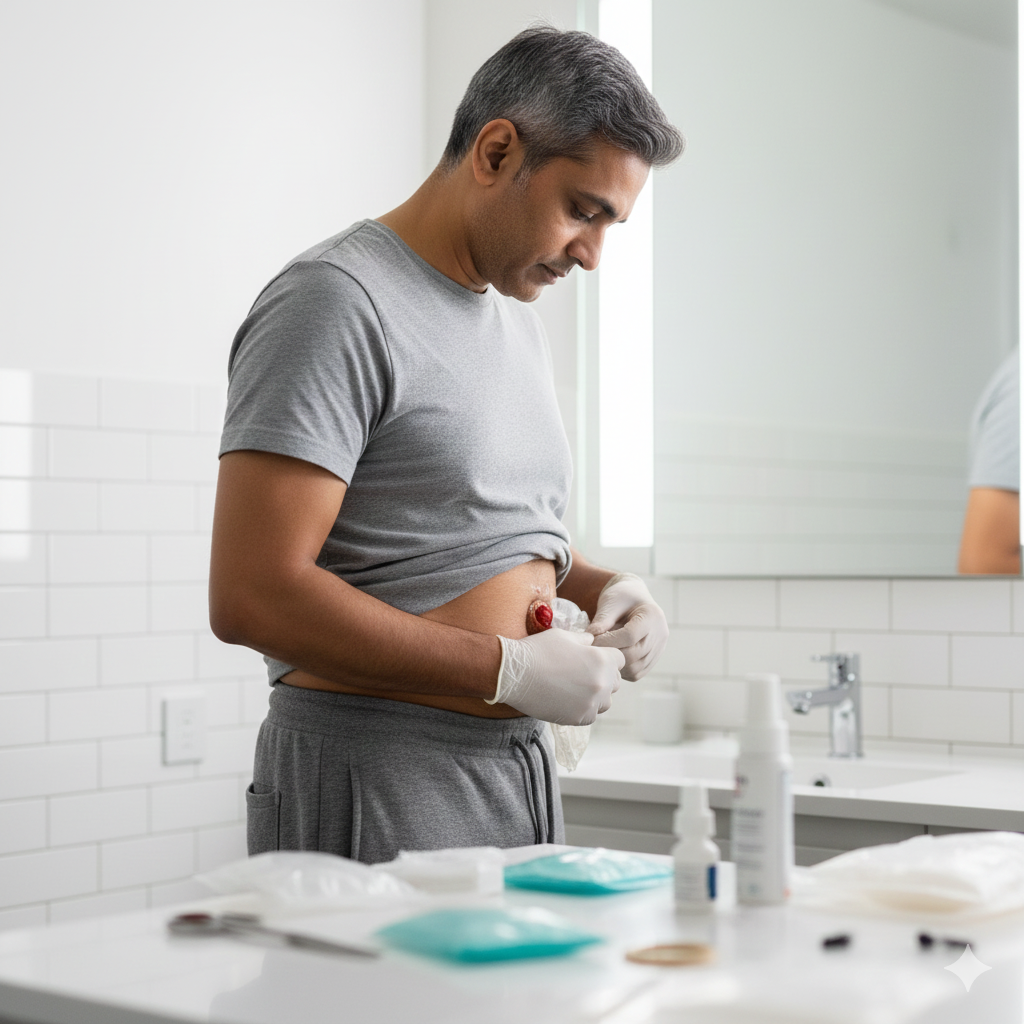
- Your doctor or nurse will guide you on how to care for the drain at home.
- Empty the drain when it is half full or every 24 hours, whichever comes first.
- Wash your hands thoroughly with soap and water.
- Remove the plug from the top of the drain.
- Pour the collected fluid into a measuring cup.
- Clean the plug with an alcohol swab or cotton ball dipped in rubbing alcohol.
- Squeeze the drain flat and replace the plug. (It should remain flat until it starts filling again.)
- Check that the tubing is not kinked or twisted.
- Refasten the drain to your clothes below your surgery site so it doesn’t pull on your skin.
- Record the amount of fluid you emptied, along with the date and time. Bring this record to your next follow-up.
- Flush the fluid down the toilet and wash your hands again.
4. When Will My Drain Be Removed?
- The amount of fluid collected should gradually decrease each day.
- Your doctor will decide when it’s safe to remove the drain.
⚠If the amount of fluid suddenly increases, contact your doctor immediately.
5. Possible Complications of a Drain you may experience:
- Mild discomfort or soreness around the drain site.
- Some difficulty lying on the same side as the drain.
- A small amount of fluid leakage near the site.
- The drain may move slightly or come loose if pulled accidentally.
- Occasionally, the tube may get blocked or kinked and need adjustment.
- A small mark or scar may remain after removal.
- Rarely, the site may signs of infection, such as redness, warmth, or increased pain, if this happens let your doctors know promptly
6. When to Seek Immediate Medical Help?
Contact your doctor or hospital if:
- The drain breaks or comes out completely.
- The drain or tubing is not visible or cannot be felt.
- You have bleeding from the drain site.
- The fluid is cloudy, yellow, brown, or has a foul smell.
- The amount of drainage has suddenly increased or stopped completely.
- You have a fever above 101.5°F (38.6°C) or chills.
- There is increasing pain, redness, or swelling around the drain site.
- You drain less than 10 ml (2 tablespoons) in 24 hours (unless advised otherwise).
- You have any concerns or questions about your drain care.